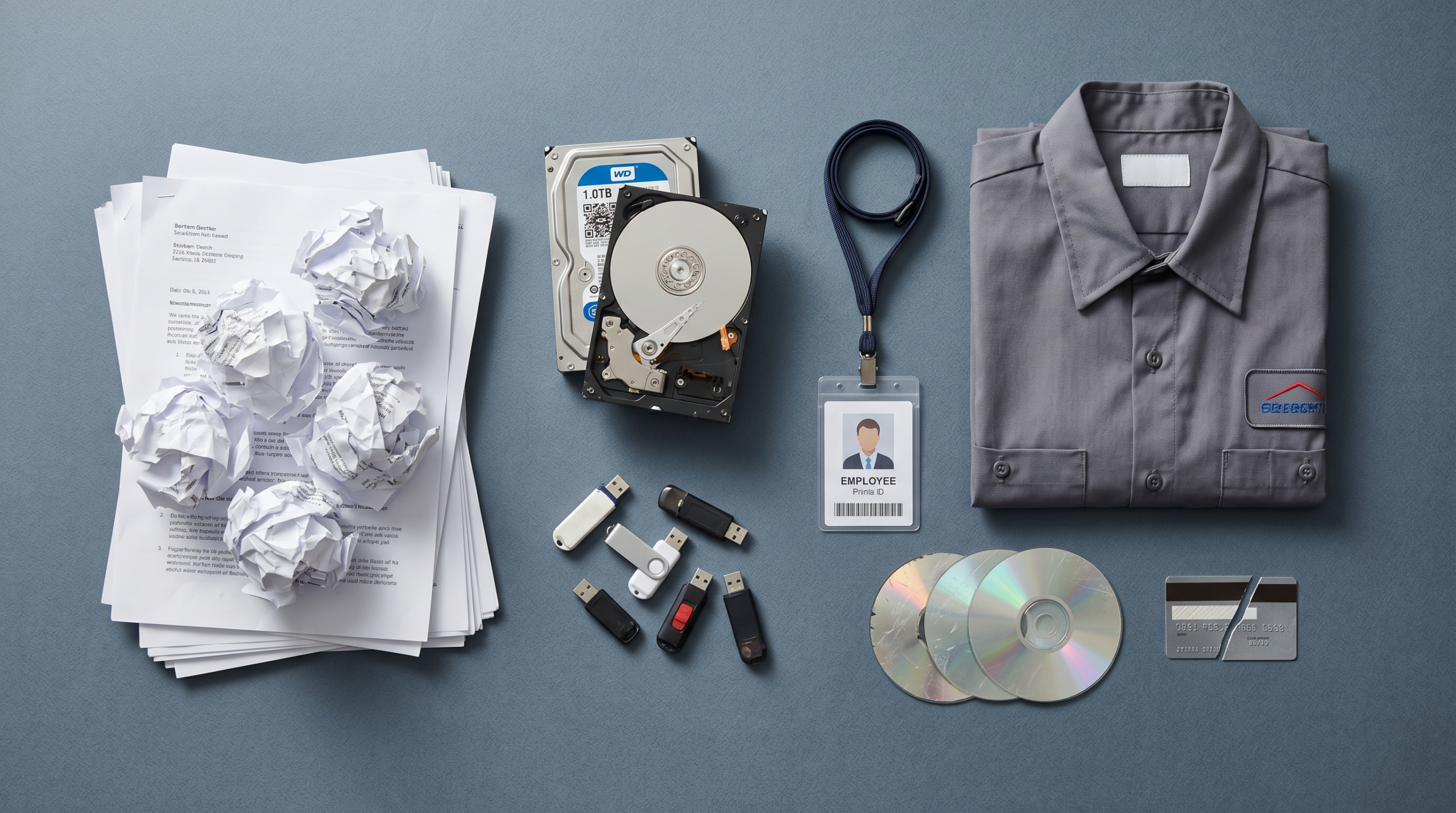
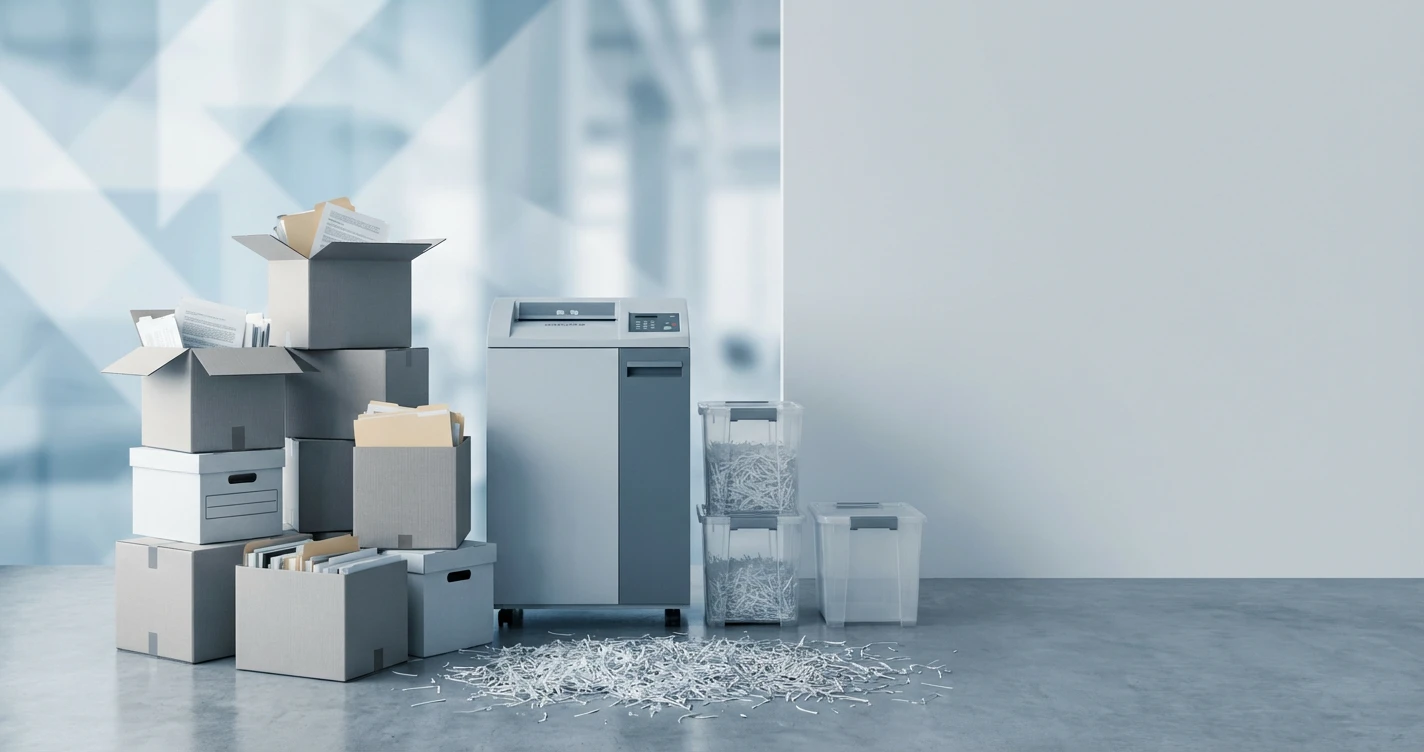
After professional shredding, your documents are reduced to confetti-sized particles, baled, and sent to a certified recycling facility where the paper is pulped into new products. The entire chain of custody is tracked and documented, from the moment a shredding truck arrives at your door to the final Certificate of Destruction you receive.
At INFOshred, we have handled secure document destruction across the Lower Mainland for over 15 years. This article walks you through every stage of the professional shredding process so you know exactly where your confidential records end up, and why it matters for PIPEDA compliance.
How the Professional Shredding Process Works, Step by Step

Most Vancouver businesses and residents assume shredding is a single event. In practice, it involves five distinct stages, each designed to prevent unauthorized access to your information.
1. Secure collection. Locked shredding bins or consoles are placed at your office or home. Documents go in, but nothing comes out without a key held by the shredding provider.
2. Chain of custody transfer. A uniformed driver arrives at your location with a GPS-tracked vehicle. Documents are handled under a strict chain of custody protocol, which means every handoff is logged.
3. Shredding. Industrial-grade cross-cut shredders reduce paper to particles as small as 5/16″ x 1-3/4″. This exceeds the DIN 66399 Level P-3 standard that most Canadian privacy regulations require. With on-site (mobile) shredding, this happens right in front of your building. You can watch the process on the truck’s closed-circuit camera.
4. Baling and transport. Shredded material is compressed into bales inside the truck and transported to a certified recycling facility in Metro Vancouver.
5. Certificate of Destruction. You receive a Certificate of Destruction confirming the date, time, and method of destruction. This document is essential for PIPEDA audits, insurance claims, and regulatory compliance.
|
|
|
|
|
|
|
|
|
|
|
|
|
|
|
|
|
|
|
|
|
|
|
|
Why the Chain of Custody Matters Under Canadian Privacy Law
Canada’s Personal Information Protection and Electronic Documents Act (PIPEDA) and British Columbia’s Personal Information Protection Act (PIPA) both require organizations to dispose of personal information securely. Simply tossing documents in a recycling bin does not meet this standard.
A proper chain of custody means your documents are tracked from the moment they leave your hands until destruction is confirmed in writing. If the Office of the Privacy Commissioner ever audits your business, that Certificate of Destruction is your proof of compliance.
This matters more than most Lower Mainland businesses realize. Data breaches from improperly discarded documents can result in fines, lawsuits, and reputational damage. In 2023, the OPC reported a significant increase in complaints related to physical document disposal.
For businesses in Vancouver, Burnaby, Surrey, Coquitlam, and throughout the Fraser Valley, working with a local shredding provider simplifies the compliance process. A company based in the Lower Mainland can respond quickly, maintain consistent service schedules, and provide documentation that meets both federal and provincial standards.
On-Site vs. Off-Site Shredding: What Happens Differently
Vancouver businesses generally choose between two shredding methods. Both are secure, but the process differs.
On-site (mobile) shredding means a truck equipped with an industrial shredder comes to your location. Documents are destroyed in the parking lot or loading area while you watch. This is the most popular option for businesses that handle sensitive records like medical files, legal documents, or financial data.
Off-site shredding involves secure transport of your documents to a shredding facility. Documents travel in locked containers inside a GPS-tracked vehicle. Destruction happens at the facility, and you still receive a Certificate of Destruction.
|
|
|
|
|
|
|
|
|
|
|
|
|
|
|
|
|
|
|
|
|
|
|
|
|
|
|
|
For most Vancouver offices, on-site shredding is the preferred choice because staff can witness the destruction. Law firms, medical clinics, and financial advisors along Broadway, in Metrotown, and throughout downtown Vancouver often require witnessed destruction as part of their internal compliance policies.
Where Does the Shredded Paper Go After Destruction?
Once your documents are shredded, the material does not go to a landfill. Shredded paper is one of the most recyclable materials in the waste stream.
After shredding, the confetti-like particles are compressed into dense bales weighing several hundred pounds each. These bales are transported to a pulp and paper recycling facility, typically in the Metro Vancouver region or elsewhere in BC.
At the recycling plant, the shredded paper goes through several stages:
- De-inking. Chemicals remove ink, toner, and adhesives from the paper fibers.
- Pulping. The clean fibers are mixed with water to create a slurry.
- Screening. Contaminants like staples, paper clips, and plastic fragments are filtered out.
- Drying and pressing. The pulp is formed into new paper products, including cardboard, tissue paper, and newsprint.
One ton of recycled paper saves roughly 17 trees, 7,000 gallons of water, and 3 cubic yards of landfill space. For a busy Vancouver office generating several bins of paper waste per month, professional shredding combined with recycling is both the secure and the environmentally responsible option.
INFOshred sends all shredded material to certified recycling facilities after every job, so your documents are destroyed securely and diverted from the landfill.
When to Schedule Professional Shredding for Your Vancouver Business
You do not need to wait for a crisis or an audit to schedule shredding. Here are the most common triggers for Lower Mainland businesses:
- Year-end document purge (January to February). After closing out the fiscal year, many offices clear out records that have passed their mandatory retention period.
- Tax season cleanup (April to May). Once tax filings are complete, supporting documents older than six years (per CRA guidelines) can be securely destroyed.
- Office moves or renovations. Relocating within Metro Vancouver is a natural time to purge outdated files.
- Employee turnover. When staff leave, HR files, access credentials, and printed communications should be destroyed.
- Ongoing compliance schedules. Recurring weekly or monthly service keeps your office compliant year-round without a backlog.
If your business produces more than a few boxes of confidential paper per month, a recurring shredding service with locked consoles is the most cost-effective and secure approach. INFOshred offers free consultations to help you determine the right schedule and container setup for your office. Get a free estimate here.
Frequently Asked Questions
Is shredded paper really impossible to reconstruct?
Cross-cut shredding produces thousands of tiny particles per page. Reconstructing a single document from cross-cut shreds is considered practically impossible, even with forensic tools. Industrial shredders used by professional services like INFOshred exceed the security level of any home or office shredder.
Do I need to remove staples and paper clips before shredding?
No. Industrial shredding equipment handles staples, paper clips, binder clips, and even small binder rings without any issues. You do not need to prep your documents before placing them in the shredding bin. This is one of the key advantages over using a personal office shredder.
How long should I keep documents before shredding them?
The Canada Revenue Agency requires you to retain tax records for at least six years from the date you filed. Beyond tax records, retention periods vary by document type. Employment records, contracts, and corporate filings each have different requirements under federal and provincial law. When in doubt, consult your accountant or legal advisor before scheduling destruction.
What is a Certificate of Destruction, and do I need one?
A Certificate of Destruction is a formal document confirming that your records were securely destroyed on a specific date using an approved method. Under PIPEDA and PIPA, organizations are expected to be able to demonstrate how they dispose of personal information. This certificate is your proof. Keep it on file for audits, insurance reviews, and regulatory inquiries.
Can I watch my documents being shredded?
Yes. With on-site mobile shredding, the shredding truck comes to your location and you can observe the entire process via the truck’s closed-circuit camera. This is a popular option for Vancouver law firms, medical offices, and financial institutions that require witnessed destruction.
Ready to see exactly how your documents are destroyed? INFOshred brings industrial-grade mobile shredding directly to your Vancouver or Lower Mainland location. Every job includes a Certificate of Destruction for your compliance records. Request a free estimate or call (604) 716-9464 to schedule your shredding service.