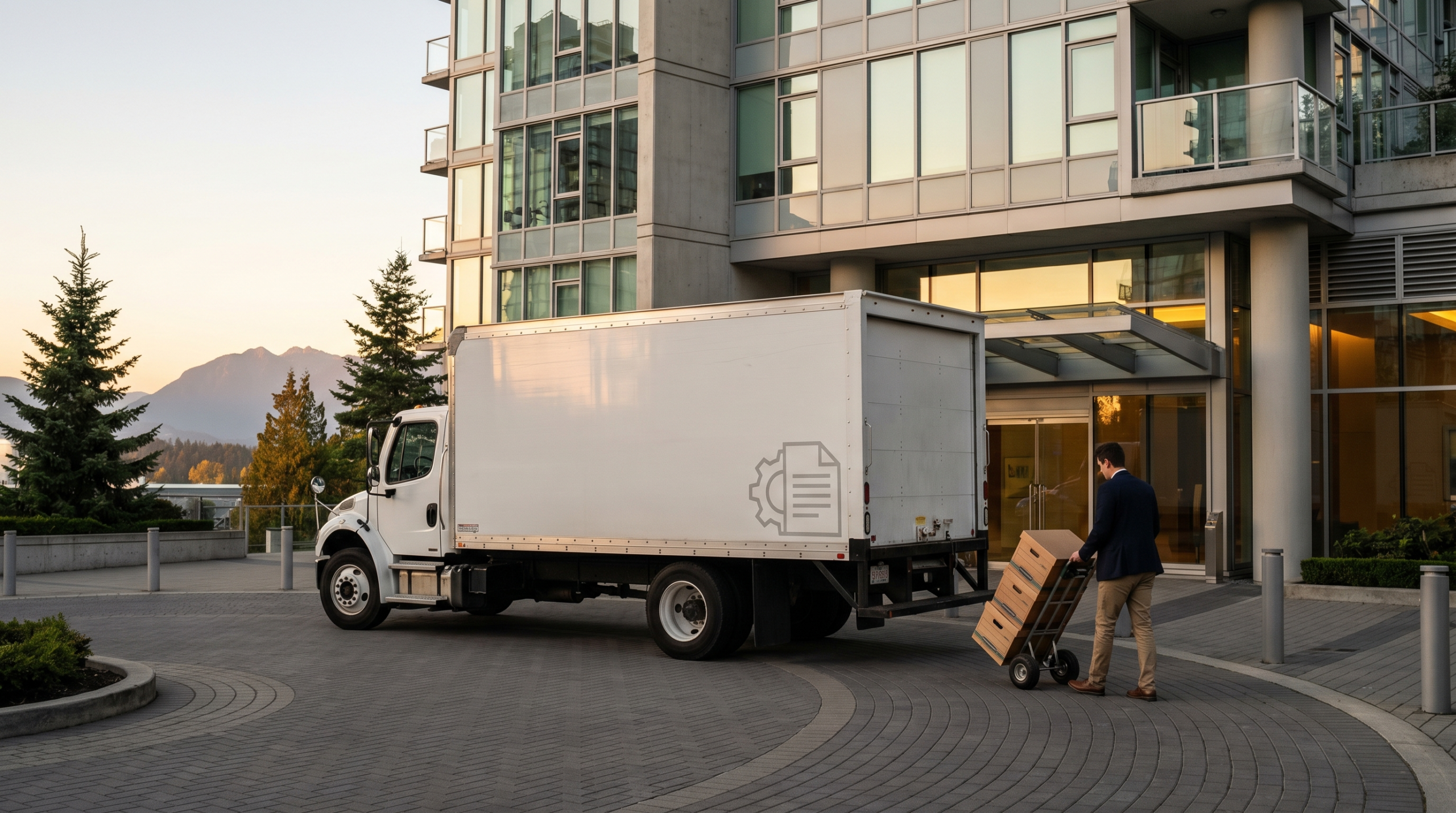
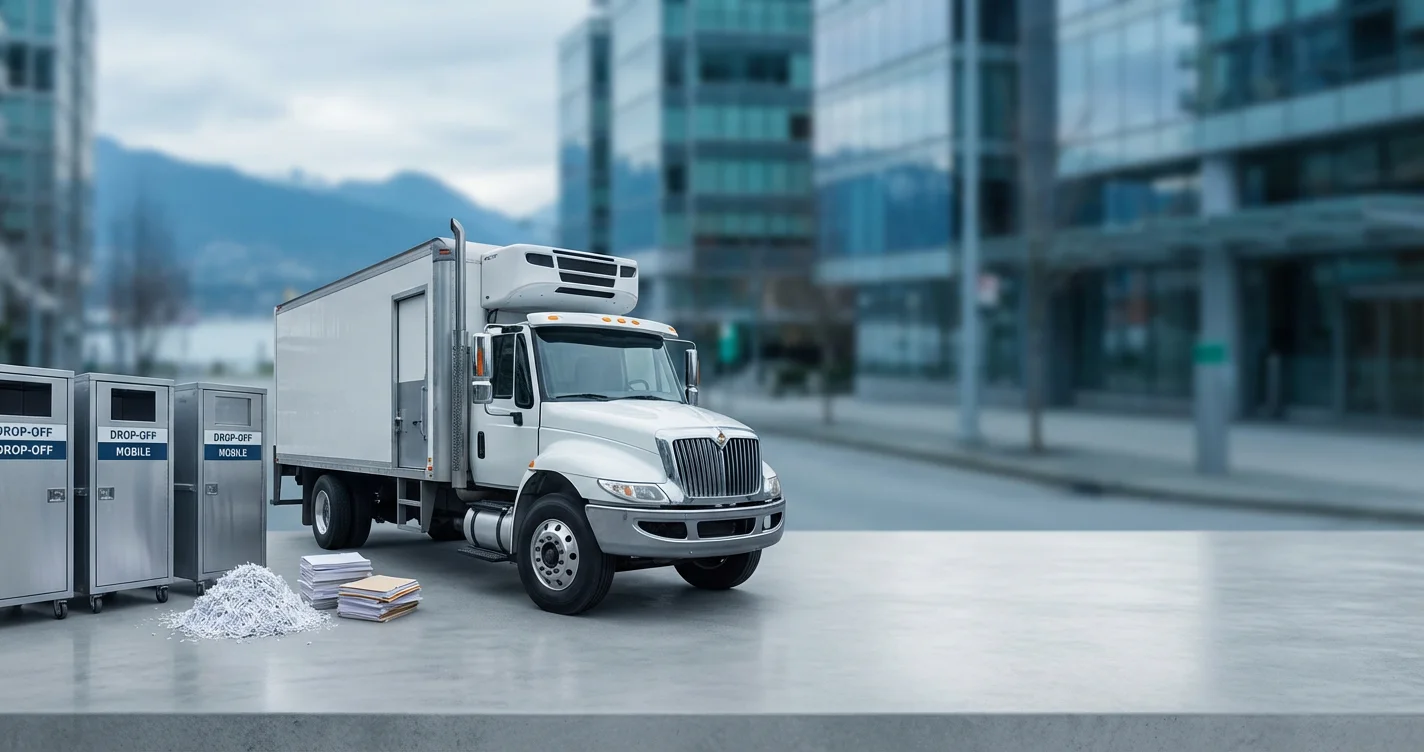
Yes, INFOshred runs mobile shredding trucks to Vancouver stratas and condo buildings, including underground parkades. Our trucks fit standard underground access (clearance 6’10" or higher), shred documents onsite while the strata manager or council member watches, and issue a Certificate of Destruction sized appropriately for the BC Strata Property Act retention rules. The whole visit typically takes 30 to 60 minutes for a normal AGM cleanout, longer for a full storage room purge.
Stratas are a uniquely BC concern. Most national shredding companies treat condo buildings as residential pickups and price them like a home visit. INFOshred handles stratas as commercial clients because the volume, the council recordkeeping requirements, and the audit obligations are commercial. This guide walks through how a typical strata shredding visit works in Vancouver, what documents your council needs to destroy, and how to schedule it.
Why Vancouver Stratas Need Professional Shredding
The BC Strata Property Act and the Personal Information Protection Act (PIPA) both apply to strata corporations. Together they require that owner records, financial files, AGM minutes drafts, and resident personal information be retained for specified periods and then destroyed securely. "Securely" is not defined as a household paper shredder. It is defined as destruction that cannot be reversed and that produces a documented chain of custody.
For a typical Greater Vancouver strata, this means:
- Old AGM and SGM packages (the year-end purge)
- Outdated owner lists and contact rosters
- Closed bylaw infraction files
- Insurance claim documentation past retention
- Old property management transition files
- Former resident parking and storage records
- Expired access fob and key records
- Council member personal notes containing owner information
Storing these indefinitely creates liability. Throwing them in the recycle bin violates PIPA. Running them through a home shredder creates inconsistent destruction and leaves no audit trail. Mobile shredding solves all three problems in one visit.
How a Strata Mobile Shredding Visit Works
The process is built around the practical realities of condo buildings in Vancouver. Here is the typical flow.
Step 1: Book the visit. A strata council member, the property manager, or the resident manager calls or requests a quote. We confirm parking access, underground clearance, and material volume.
Step 2: Stage the documents. The council or building manager collects records into banker’s boxes or our locked containers. Staples, paper clips, and folders stay in the boxes. Binders need to be emptied first.
Step 3: Truck arrival. The INFOshred truck arrives at the agreed time. For underground parkades, we confirm clearance and route in advance. If the parkade is too low, we stage at the loading bay or a surface spot.
Step 4: Onsite shredding. Boxes go into the truck’s feed conveyor. A camera lets the council representative watch the shredding happen in real time. For a standard 10-box AGM purge, the destruction takes 15 to 25 minutes.
Step 5: Certificate of Destruction. Before we leave, you receive a signed Certificate of Destruction documenting the date, time, volume, materials destroyed, and chain of custody. This is the document your strata files for the audit trail.
Step 6: Recycling. The shredded paper goes to a certified recycling mill in BC. Metal from staples and clips is recovered by magnetic separation at the mill.
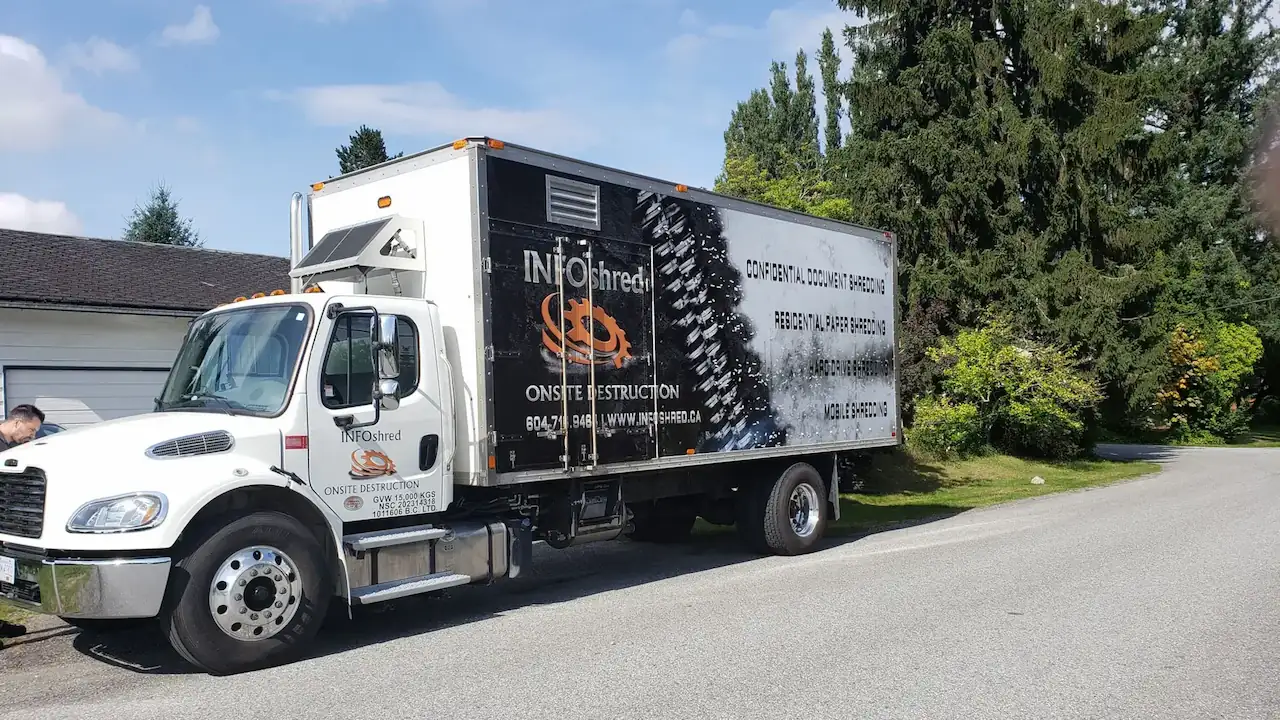
Can Mobile Shredding Trucks Access Underground Parkades?
Yes, with planning. INFOshred trucks are sized to fit standard Vancouver underground parking clearance (typically 6’10" or 7′ minimum). Older buildings and some heritage conversions have lower clearance, in which case we stage at:
- The loading bay
- The main entry circle
- A surface parking spot
- The fire lane (with strata approval and brief access)
When you book, mention the building address and any clearance concerns. We confirm before the visit. If clearance is a problem, we can also send a smaller truck or arrange a curbside transfer where building staff bring boxes out to the truck.
This matters because most national shredding services use larger trucks that won’t fit Vancouver’s older parkades. We routinely serve buildings in Yaletown, West End, Kitsilano, Mount Pleasant, North Vancouver, Burnaby, and the Tri-Cities where parkade access requires the right truck size.
What Strata Documents Need to Be Shredded?
Under BC strata law, some documents must be retained for specific periods and then destroyed. Here is a general guideline (consult your property manager or legal counsel for specifics):
| Document Type | Typical Retention | Destruction Method |
|---|---|---|
| AGM/SGM minutes (originals) | Permanent | Do not shred |
| Draft minutes, working notes | Until finalized | Shred after AGM |
| Financial statements (originals) | 7 years minimum | Shred after retention |
| Owner contact lists (outdated) | Current only | Shred when superseded |
| Bylaw infraction files (closed) | 7 years | Shred after retention |
| Insurance claims (closed) | 7 years | Shred after retention |
| Council correspondence with owners | Council discretion | Shred per policy |
| Former resident files | After move-out + retention | Shred per policy |
| Parking and storage assignments (former residents) | Current only | Shred when superseded |
| Access fob records (former residents) | Per security policy | Shred when superseded |
What your strata absolutely should not throw in the recycling bin: anything with an owner’s name, unit number, financial information, or contact details. That includes old phone trees, contact rosters, and former resident files. PIPA covers all of it.
How Often Should a Vancouver Strata Schedule Shredding?
For most Greater Vancouver stratas, an annual purge after AGM is the right cadence. Larger buildings (over 100 units) often schedule semi-annually because the volume justifies it. Strata management companies handling multiple buildings sometimes consolidate into quarterly visits to spread the cost.
If your strata is doing a one-time cleanout (new property manager taking over, old storage room being repurposed, paperless transition), expect 15 to 40 boxes for a building of 50 to 150 units that hasn’t purged in five-plus years. That is a single mobile shredding visit, usually under an hour.
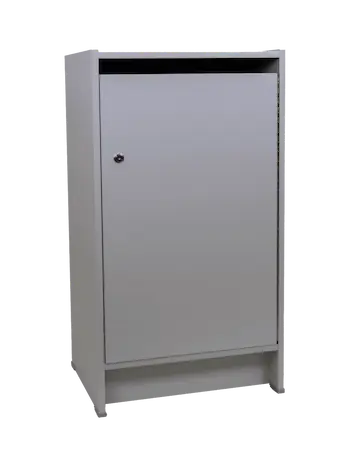
For ongoing service, we can place a locked shredding container in the strata management office or council room with monthly or quarterly pickup. This keeps records from accumulating between AGMs.
Pricing for Strata Mobile Shredding in Vancouver
Most Vancouver stratas pay by the banker’s box or by the pound. A typical AGM cleanout for a 50 to 100 unit building runs in the range of standard commercial mobile shredding rates, with the truck visit fee shared across boxes.
For a sense of current Vancouver paper shredding costs, expect mobile shredding to be priced competitively against drop-off services once you account for staff time, transport, and chain-of-custody requirements. For ongoing service with a locked container, monthly rates are predictable and budgeted in the strata’s operating budget.
Strata councils can usually approve a one-time shredding visit under normal operating expenditure authority. For recurring service, it goes through the standard budget approval process.
Frequently Asked Questions
Do you serve stratas outside Vancouver proper?
Yes. INFOshred serves Maple Ridge, BC and Greater Vancouver including Burnaby, Surrey, Coquitlam, Langley, North Vancouver, Richmond, Delta, White Rock, Pitt Meadows, Mission, Abbotsford, Chilliwack, and Port Coquitlam. Stratas in all these communities use our mobile shredding.
Can you provide a Certificate of Destruction the strata can file?
Yes. Every visit includes a signed Certificate of Destruction with date, time, volume destroyed, and chain of custody. This is what your property manager files for the audit trail.
What if the strata council wants a representative to watch?
That is encouraged. The truck has a camera trained on the cutting chamber, and the council member can watch the shredding happen in real time. This is one of the main reasons stratas choose onsite versus offsite shredding.
How much notice does a strata need to schedule shredding?
Typically 3 to 7 days, longer during peak AGM season (typically March through May in Vancouver). We accommodate urgent same-week requests when the route allows.
What about resident shredding events?
Some stratas offer annual resident shredding events where individual owners bring their personal documents to be destroyed. INFOshred can stage a truck for a community shredding event at the strata, typically for two to four hours.
Can the strata add hard drives, old electronics, or branded items to the visit?
Yes. Old building security drives, expired key fob systems, and confidential council materials can all be destroyed in the same visit. One certificate covers everything.
What if the building has no loading dock and no underground access?
We adapt. Curbside service is common in Vancouver heritage buildings and older walk-up condos. The truck stages at the street, the council representative or property manager brings boxes out, and shredding happens at the curb.
Ready to Schedule Your Strata Shredding Visit?
If your strata council has been putting off the AGM document purge, or you’re transitioning to a new property manager, or you just inherited a storage room full of old records, mobile shredding handles it in one visit. INFOshred serves stratas across Maple Ridge, BC, and Greater Vancouver with a 4.8-star Google rating and a Certificate of Destruction included on every job.
Get a free quote or call 604-716-9464. Mention your building address and parkade clearance when you book.