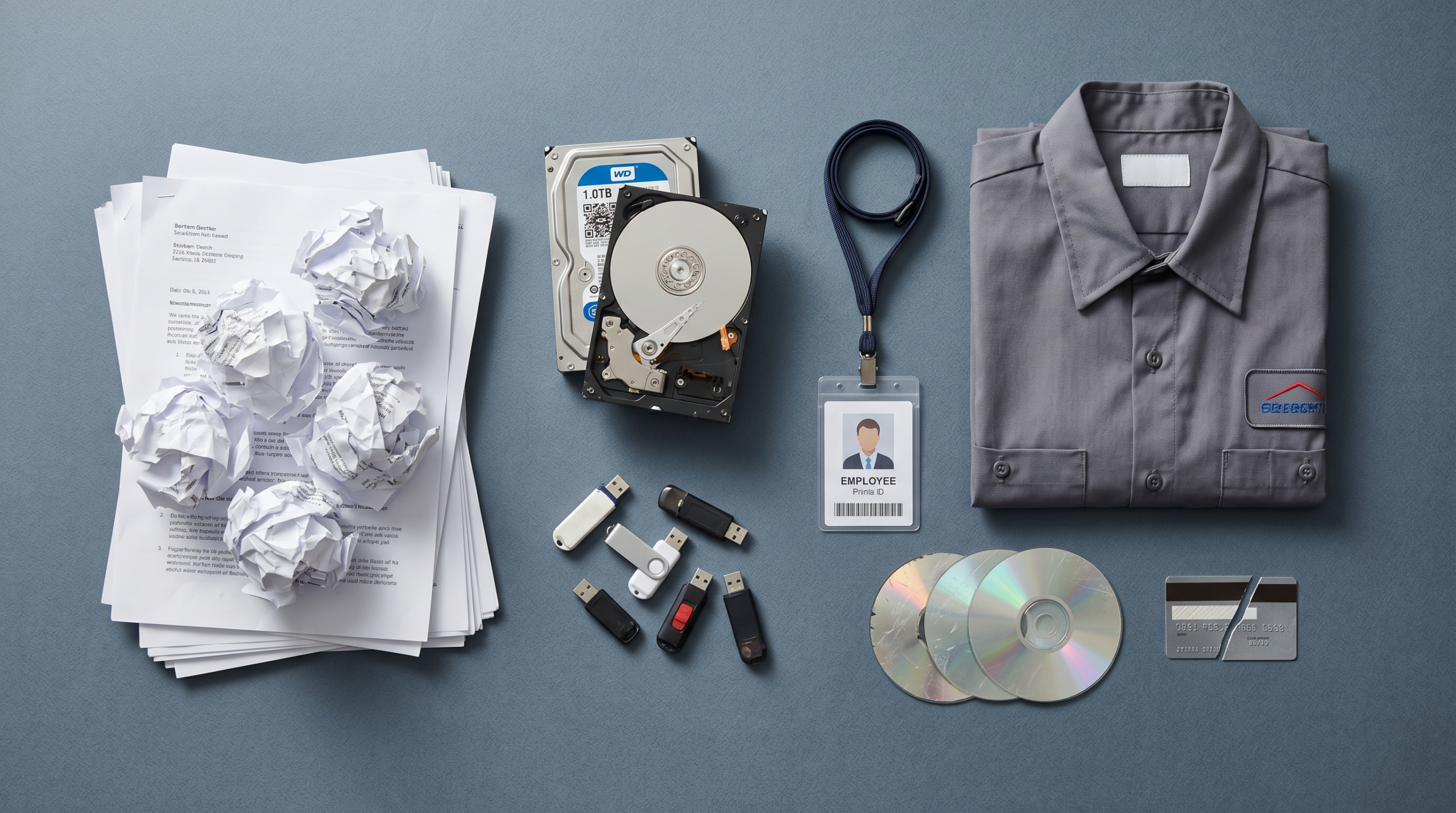
The Canada Revenue Agency requires you to keep tax records for at least six years from the date you filed your return. After that retention period expires, any documents containing personal or financial information should be professionally shredded, not tossed in a recycling bin.
With over 15 years of experience handling secure document destruction across the Lower Mainland, INFOshred sees a spike in shredding requests every April and May. Tax season is the single biggest trigger for Vancouver businesses and residents to finally deal with boxes of old records. This guide breaks down exactly what to keep, what to shred, and how to do it safely under Canadian privacy law.
CRA Document Retention Rules: The Six-Year Standard
The baseline rule is straightforward. The CRA states that you must retain all records and supporting documents for six years from the end of the last tax year they relate to. This applies to both personal and business tax filings.
Here is what that looks like in practice: if you filed your 2019 personal tax return in April 2020, the six-year clock started at the end of the 2019 tax year (December 31, 2019). That means you can safely destroy those records after December 31, 2025. Right now, in spring 2026, you are clear to shred anything from the 2019 tax year and earlier.
Important exceptions to the six-year rule:
- Unfiled returns. If you never filed a return for a given year, you must keep those records indefinitely until you file.
- Objections or appeals. If you disputed a CRA assessment, keep all related records until the matter is fully resolved, plus six years.
- Corporate dissolution. Business records must be retained for two years after the date of dissolution, or six years from the last tax year, whichever is later.
- Capital property records. Keep purchase records for assets like real estate or investments until six years after you sell or dispose of the property.
|
|
|
|
|
|
|
|
|
|
|
|
|
|
|
|
|
|
|
|
|
What to Keep: Documents You Should Never Shred
Some documents should be retained permanently, regardless of the CRA’s six-year rule. These records either have no expiration or serve as proof of identity, property, and legal status.
Keep permanently:
- Birth certificates, marriage certificates, and divorce decrees
- Social Insurance Number (SIN) cards and documentation
- Citizenship and immigration papers
- Property deeds and titles
- Will and estate documents
- Life insurance policies
- Pension and retirement plan records (until fully settled)
- Business incorporation documents
Keep for six years after filing:
- T4 and T4A slips (employment and pension income)
- T5 slips (investment income)
- T3 slips (trust income)
- RRSP and TFSA contribution receipts
- Charitable donation receipts
- Medical expense receipts (if claimed)
- Moving expense receipts (if claimed)
- Home office expense records
- Business income and expense records
- Bank and investment statements supporting deductions
What to Shred: Documents Ready for Destruction After Tax Season
Once you have confirmed the retention period has passed, these document types should be securely destroyed:
- Old tax returns and supporting receipts from 2019 and earlier (as of spring 2026)
- Bank statements older than six years that are not tied to ongoing disputes or capital property
- Pay stubs older than six years (you have the T4 for reference)
- Utility bills older than one year (unless claimed as a home office deduction, then six years)
- Credit card statements older than six years
- Insurance policy documents for policies you no longer hold
- Old employee records past their provincial retention requirement
- Expired contracts with no ongoing legal relevance
Do not put these in your blue bin. Under PIPEDA and BC’s Personal Information Protection Act (PIPA), any document containing personal information, including names, SINs, account numbers, or addresses, must be disposed of securely. Tossing them in curbside recycling is a privacy breach waiting to happen.

How Vancouver Businesses Should Handle Post-Tax-Season Shredding
For businesses across Metro Vancouver, tax season creates a natural checkpoint to purge old records. Here is a practical approach:
Step 1: Audit your file storage. Go through filing cabinets, storage rooms, and banker’s boxes. Separate documents into three categories: keep (active or within retention period), shred (past retention), and review (uncertain, check with your accountant).
Step 2: Check with your accountant or legal advisor. Before destroying anything, confirm with your tax professional that the documents are past their required retention period. This is especially important for capital property records, ongoing CRA disputes, or corporate files.
Step 3: Schedule professional shredding. A professional service handles the volume efficiently and provides a Certificate of Destruction for your records. This certificate proves you disposed of documents properly if the CRA or a privacy regulator ever asks.
Step 4: Establish a recurring schedule. Instead of letting paper pile up for another year, set up a regular shredding schedule with locked consoles in your office. Many Vancouver businesses on the Broadway corridor, in Metrotown, and throughout downtown find that monthly or bi-weekly service keeps them audit-ready without the annual scramble.
INFOshred offers recurring shredding service with locked containers placed right in your office. When the bins fill up, a mobile truck arrives and shreds everything on-site.
Tax Season Shredding for Vancouver Homeowners and Individuals
You do not need to run a business to benefit from professional shredding after tax season. Many Maple Ridge, Vancouver, and Lower Mainland residents accumulate years of personal tax documents, bank statements, and financial records at home.
Here are your options as an individual:
- Drop-off shredding. Bring your boxes to a drop-off location and pay by weight. Several locations operate across Metro Vancouver, including UPS Store locations at $1.49 per pound.
- Mobile shredding. For larger volumes (five or more banker’s boxes), scheduling a mobile shredding truck is more convenient and often more cost-effective. The truck comes to your home and shreds everything while you watch.
- Community shredding events. Some municipalities in the Lower Mainland host periodic shredding events, though availability varies by city and year.
For most individuals with more than a couple of boxes, a one-time mobile shredding visit is the most practical option. INFOshred serves homeowners throughout the Lower Mainland, from North Vancouver to Abbotsford, with no minimum volume requirement for residential jobs. Contact us for a free quote.
Frequently Asked Questions
How long do I have to keep tax records in Canada?
The CRA requires a minimum of six years from the end of the tax year the records relate to. For example, 2020 tax year records can be destroyed after December 31, 2026. If you have unfiled returns, ongoing disputes, or capital property transactions, keep those records until the situation is fully resolved plus six additional years.
Can I shred documents myself with a home shredder?
You can, but home shredders have limitations. They jam frequently, overheat with large volumes, and most use strip-cut blades that produce less secure shreds. For a few pages, a home shredder works fine. For banker’s boxes worth of old tax records, a professional service is faster, more secure, and eliminates the hassle.
What is the penalty for destroying tax records too early in Canada?
The CRA can impose penalties and may reassess prior tax years if you cannot produce supporting documents during an audit. There is no single fixed penalty amount. The consequences depend on the nature of the audit and the missing records. Keeping your Certificate of Destruction on file proves you followed proper disposal procedures.
Is it safe to recycle documents with personal information?
No. Curbside recycling is not secure. Documents pass through multiple hands at sorting facilities, and personal information can be retrieved before the paper is processed. Professional shredding is the only disposal method that meets PIPEDA and PIPA requirements for personal information.
When is the best time to schedule shredding after tax season?
April through May is peak shredding season in Vancouver. If you want to avoid wait times, schedule your service in late March (before the rush) or in June (after it subsides). For businesses with recurring service, the cleanup is built into the regular schedule.
Tax season is behind you. Those old records do not need to follow you into next year. INFOshred provides secure, on-site document shredding across Metro Vancouver with a Certificate of Destruction for every job. Get a free estimate or call (604) 716-9464 to schedule your post-tax-season purge.