Most people have a box — or three — of old bank statements, tax returns, and insurance papers sitting in a closet. For seniors managing decades of paperwork, that pile is more than clutter. It is a security risk sitting in plain sight.
Seniors are among those who suffer the highest financial losses from fraud in Canada. According to the Canadian Anti-Fraud Centre, older Canadians consistently face some of the largest per-victim losses of any age group — and unsecured paper documents remain a common entry point.
This guide covers everything to know about free paper shredding for seniors — where to find community events, which documents to prioritize, and when a professional service makes more sense than waiting. We will look at the free options available in most communities, the documents that should never go in the recycling bin, and a simple way to get large volumes handled without leaving home.
Is There Free Paper Shredding for Seniors?
Free paper shredding for seniors is available through several sources in most communities. Banks and credit unions occasionally host free shredding days, typically during Fraud Prevention Month in March or in the spring. Local police non-emergency programs and municipal waste events sometimes include document destruction. Senior centres and community nonprofits also coordinate shred events throughout the year. For larger volumes or mobility limitations, a mobile shredding service is the most practical option — often available at a reasonable cost, with senior discounts available on request.
Not sure if a free event is running near you? Contact us to check availability in your area.
1. Where Seniors Can Get Free Document Shredding
Several organizations offer free or low-cost shredding options for seniors. Here is where to look.
Banks and Credit Unions
Many banks and credit unions host shred days, especially during March (Fraud Prevention Month in Canada) and around Earth Day in April. These events are free but bag limits apply — usually two to five bags per household. Spots fill quickly, so calling ahead is worthwhile.
Municipal and Community Events
Local municipalities sometimes organize community shred events as part of their waste reduction programs. Check your city or district website for upcoming dates.
Senior Centres and Nonprofit Partnerships
Some senior centres partner with local shredding companies to offer free or discounted events. Contact your nearest senior centre to ask about upcoming programs or referral arrangements.
Seniors living in strata or condo buildings may also be able to arrange shredding through their strata council. Some buildings coordinate building-wide service that covers all residents in a single visit — no driving or waiting in line required.
Police and Community Organization Programs
Some police services and community organizations coordinate periodic shred events in partnership with local groups. These events are not always widely promoted. A call to your local non-emergency line can confirm whether anything is scheduled nearby.
From experience: At community shred events, wait times often run 45 to 90 minutes and bag limits frequently cut off at two to five bags per vehicle. If you have more than a few boxes of documents, a free event may not cover everything you need.
| Source | Typical Limit | Frequency | Best For |
|---|---|---|---|
| Banks and Credit Unions | 2 to 5 bags | Seasonal (spring) | Small volumes |
| Municipal events | Varies | 1 to 2 times per year | Mixed community use |
| Senior Centre programs | Varies | Periodic | Seniors with mobility access |
| Police community events | Varies | Occasional | Light cleanup |
| Professional mobile service | No limit | Any time | Large volumes, urgent needs |
2. What Documents Seniors Should Prioritize Shredding
Not every old document needs to be destroyed. But some carry serious risk if they end up in the wrong hands. Knowing the difference makes the process faster and more effective.
Safe to Shred After 1 to 3 Years
- Utility bills
- Insurance policies (after replacement and claim period has passed)
- Old receipts not needed for tax purposes
Safe to Shred After 6 Years (CRA Standard)
The Canada Revenue Agency requires keeping records that support your tax return — including bank statements, pay stubs, and employment documents — for at least six years from the end of the tax year they relate to.1
- Bank and credit card statements
- Pay stubs and T4 slips
- Employment income records
- Explanation of benefits (EOBs) from health insurance
Keep Permanently
- Birth certificates
- SIN (Social Insurance Number) card or Confirmation of SIN letter — store securely, not in a wallet
- Wills and powers of attorney
- Property deeds and mortgage documents
- Passports — expired copies can be kept, but should not be discarded openly
Shred Immediately
- Pre-approved credit card and loan offers
- Old Medicare and provincial health insurance documents
- Outdated insurance EOBs — these contain enough personal data to support identity fraud
- Any document showing a full account number, SIN, or date of birth
A common mistake: putting sensitive documents directly into the recycling bin. Recycling bins are not secure. Documents left at the curb are accessible to anyone before pickup.
| Shred It | Keep It |
|---|---|
| Bank and credit card statements (after 6 years) | Birth certificates |
| Pay stubs and T4 slips (after 6 years) | Wills and estate documents |
| Pre-approved credit offers | Property deeds |
| Medicare and insurance EOBs | Passports |
| Insurance policies (after replacement) | SIN card or Confirmation of SIN letter (secured) |
| Tax returns (more than 6 years old) | Tax returns (last 6 years) |
3. Why DIY Document Destruction Is Not as Safe as It Sounds
Many seniors attempt to destroy documents at home. Most DIY methods fall short of what is needed to protect sensitive information.
Tearing by Hand
Torn documents still display partial account numbers, addresses, and names. Reassembling torn pieces takes very little effort.
Soaking in Water
Soaking can blur ink, but it does not fully destroy coated paper and is too slow to scale beyond a handful of documents.
Burning
Open burning is prohibited in most BC municipalities under local fire bylaws and provincial air quality regulations. Some coated or treated papers also release harmful fumes when burned.
Home Strip-Cut Shredders
Strip-cut shredders — the most common type sold at office supply stores — cut paper into long vertical strips. Independent testing has shown that strip-cut shreds can be digitally reassembled with 70 to 85 percent success using specialized software. They do not meet the minimum standard for confidential document destruction. The recognized benchmark is the DIN 66399 security level system, developed by the German Institute for Standardization and referenced by i-SIGMA in its NAID AAA certification program. It rates paper destruction from P-1 (least secure) to P-7 (most secure). Cross-cut and micro-cut shredders reach P-3 or higher. Professional shredding trucks typically operate at P-4 and above.
- Recycling bin (no destruction)
- Tearing by hand
- Soaking in water
- Home strip-cut shredder
- Home cross-cut shredder
- Professional certified shredding service

4. When a Mobile Shredding Service Makes More Sense
Free community events work well for small, occasional volumes. But several situations call for a professional document shredding service instead.
High Volume
Free events cap at five bags or less. If you have years of accumulated paperwork — filing cabinets, storage boxes, estate documents — a mobile shredding truck handles everything in one visit. No sorting required.
Mobility Limitations
With a mobile service, documents do not need to leave the property until they are loaded into the shredding truck. No driving, carrying, or waiting in line.
Certificate of Destruction
For legal, estate, and compliance purposes, a certificate of destruction confirms in writing that documents were securely destroyed. Document shredding services in Vancouver provide this certificate as a standard part of every job — free community events typically do not.
Time-Sensitive Situations
Estate clean-outs, downsizing, and moves often come with hard deadlines. A one-time purge service can be scheduled on your timeline — not around when the next free event is available.
Senior Discounts
Many shredding providers accommodate seniors, particularly for larger volume jobs. Ask about available discounts when booking.
5 Signs It Is Time to Book a Professional Pickup:
- You have more than five boxes of documents to destroy
- You need a certificate of destruction for legal or estate purposes
- You cannot transport documents to an event location
- You are on a deadline — a move, estate clean-out, or audit
- You want on-site destruction and a confirmed chain of custody
Get a free shredding quote: Contact INFOshred to book your pickup.
5. How to Prepare Your Documents Before Shredding
A little preparation before a free event or professional pickup saves time and avoids delays on the day.
Remove Hard Bindings
Binders, hardcovers, and spiral bindings need to come off before shredding. Most shredding equipment cannot process them. Set three-ring binders and metal-fastened folders aside.
Staples and Paper Clips Are Fine
Professional shredding trucks handle staples, paper clips, and small metal fasteners. There is no need to remove them. If using a free community event, confirm with staff on the day.
CDs, Hard Drives, and Credit Cards Are a Separate Stream
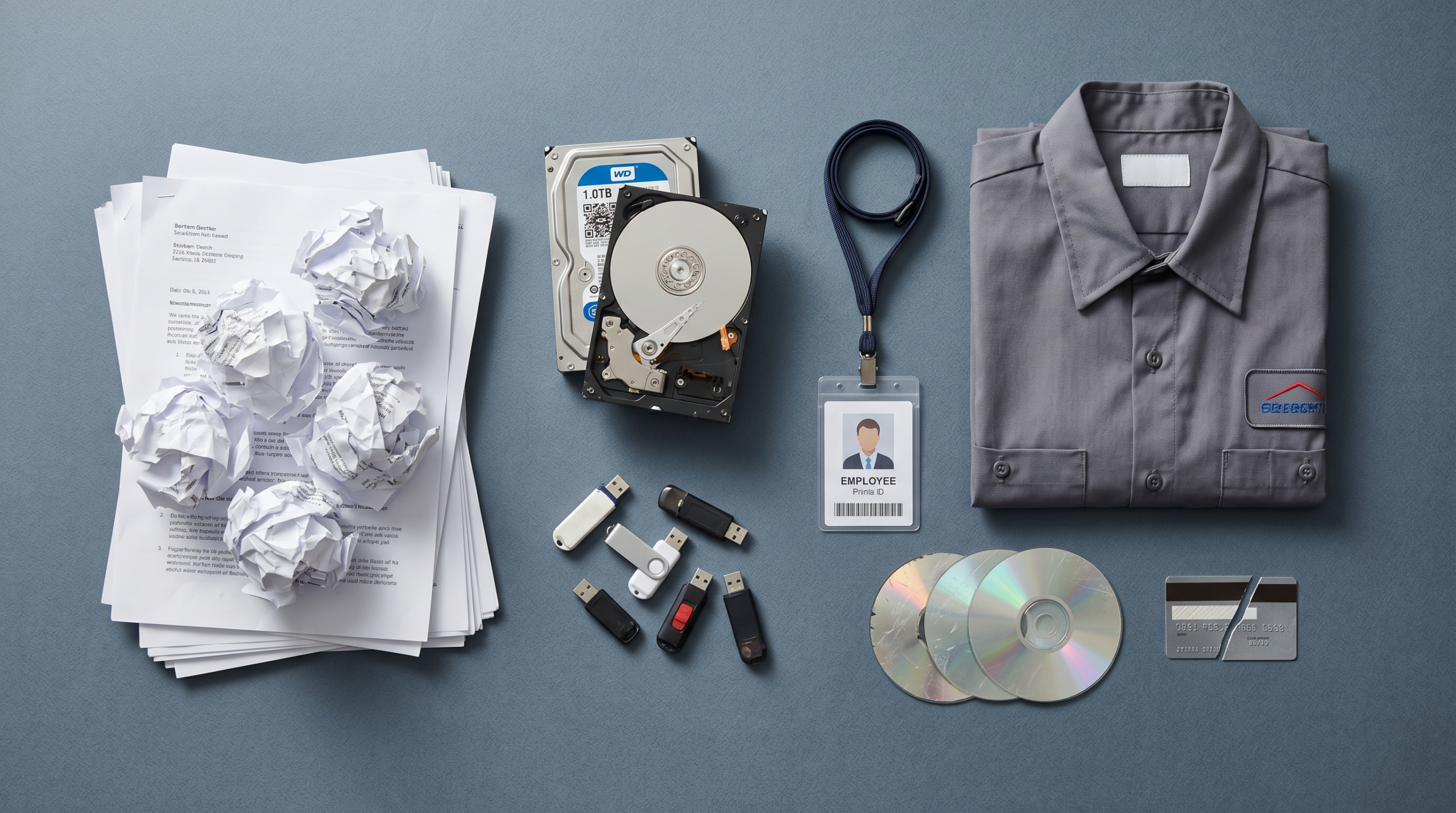
Optical discs, hard drives, USB drives, and old credit cards require a different destruction process than paper. Ask your service provider about media destruction options separately. Do not mix these with paper documents.
No Pre-Sorting Required
Documents do not need to be organized by type, date, or category before shredding. Simply load them into boxes or bags.
Box vs. Bag for Transport
Standard cardboard boxes or contractor bags both work for community events. Avoid locked briefcases or sealed containers — event staff may not have time to open them on-site.
- Remove binders and spiral bindings
- Confirm with provider whether staples need removing (usually not)
- Set aside CDs, hard drives, and credit cards separately
- Load documents into open boxes or contractor bags
- Do not use locked or sealed containers for transport
Whether the plan is a community event or a scheduled pickup, secure document destruction is one of the most effective steps seniors can take to protect their personal information. For large volumes, tight timelines, or situations requiring a certificate of destruction, INFOshred offers recurring shredding service and one-time purge options throughout Vancouver and North Vancouver.
Ready to get started? Book a pickup or ask about availability in your area.
References
- Canada Revenue Agency. How long should you keep your income tax records? Government of Canada. canada.ca