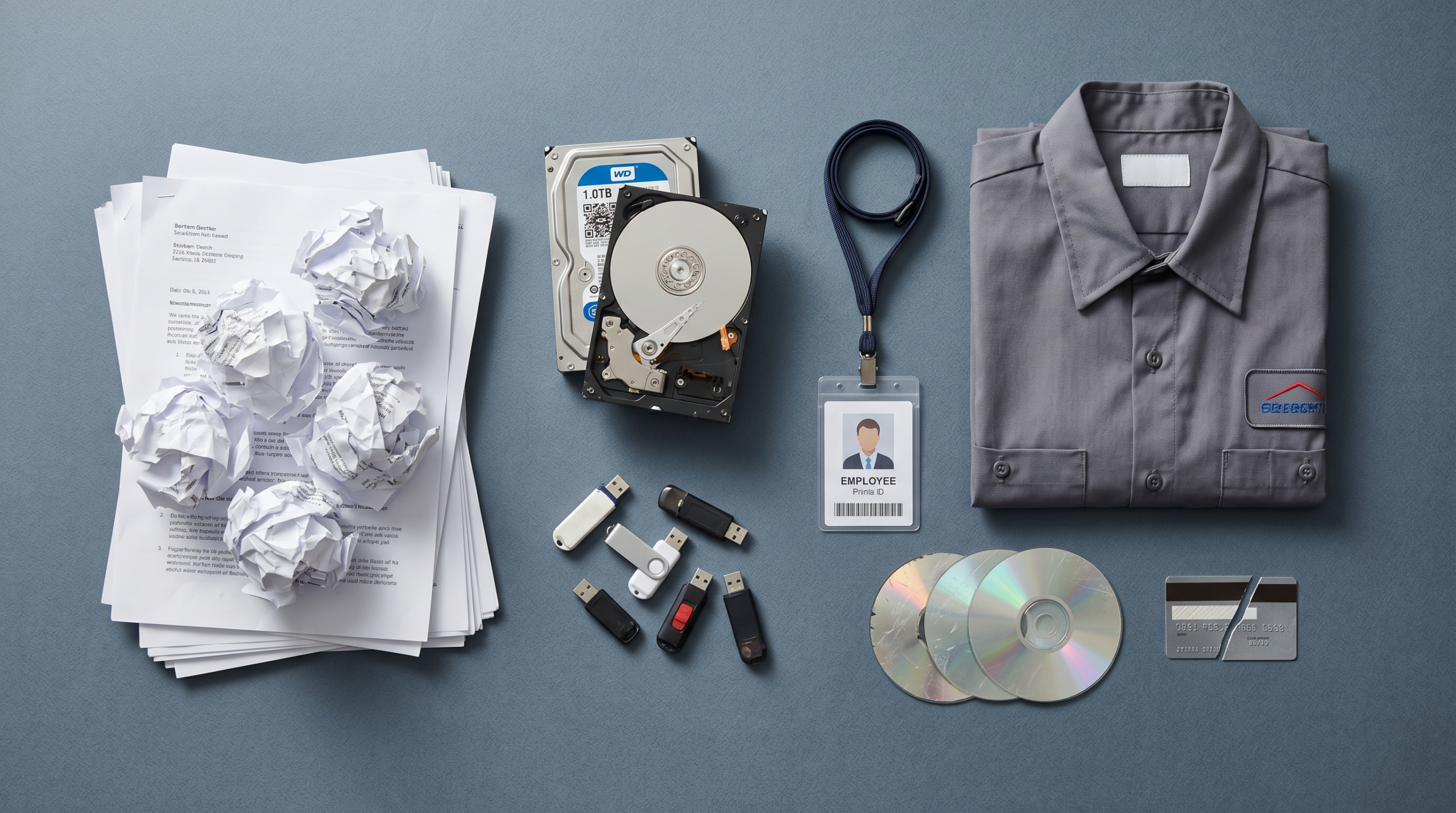
Many Canadians keep papers they could have shredded years ago. Old bank statements from 2008 are not just clutter. They are a risk. Thieves can use your personal papers to steal your identity. The Canadian Anti-Fraud Centre says identity theft is one of the fastest-growing crimes in Canada.
This guide tells you how long to keep financial papers before shredding them. We follow Canadian rules — including CRA guidelines. You will learn how long to keep each type of document, which papers to keep forever, and how to safely get rid of the rest.
In This Guide
1. The CRA 6-Year Rule Explained
2. Financial Document Retention by Category
3. Documents You Should Never Shred
4. How to Know When It’s Finally Safe to Shred
5. Why Shredding Matters — and How to Do It Securely in Vancouver
| QUICK ANSWERHow long should financial documents be kept before shredding in Canada?The CRA says you must keep most financial records for six years after the end of the tax year they relate to. Here is a quick guide by document type:• Tax returns and supporting documents: 6–7 years from tax year end• Bank statements (personal): 1–3 years• Bank statements (business): 6 years• Investment account statements: 6 years after account closes• Credit card statements: 1–3 years (longer if used for tax deductions)• Property records: Keep until 6 years after the property is sold• Pay stubs: Keep until you receive your annual T4• Wills, birth certificates, passports, SIN cards: Keep permanently — never shred |
| Know what’s ready to go? We make it simple to clear out safely. |
| See Our Financial Document Shredding Services → |
1. The CRA 6-Year Rule Explained
The Canada Revenue Agency says you must keep most records for six years. The six years starts at the end of the tax year — not when you filed. This rule applies to almost every financial paper in Canada.
The clock starts at the end of the tax year. For example, your 2023 tax papers must be kept until at least December 31, 2029. If you filed your return late, the six years starts from the day you filed — not the end of the tax year.
Why “Six Years” — and What Happens Beyond That
The CRA can look back at your records. For most people, they look back six years. But if they think there was fraud, there is no time limit at all. That is why it is smart to keep your records for the full six years — and sometimes longer.
Businesses and people have different rules. Businesses must keep tax records, payroll records, invoices, and receipts for six years. Personal tax records follow the same six-year rule. But records for a home or investment must be kept for six years after you sell — not after the tax year ends.
Do BC Businesses Face Additional Requirements?
CRA rules are the minimum standard across Canada. In BC, businesses also follow provincial privacy rules. These include BC’s Personal Information Protection Act (PIPA). This law may add extra rules about how long you keep personal information — and how you destroy it. Clinics and law firms should check their own rules on top of CRA.
| Expert note: A common mistake we see: people count six years from when they filed — not from the end of the tax year. For a 2023 return filed in April 2024, keep the records until end of 2029 — not until April 2030. |
| Document Type | Minimum Retention Period |
| Personal tax returns and T-slips | 6 years from tax year end |
| Business tax records and financial statements | 6 years from tax year end |
| Capital property purchase and sale records | 6 years after the year of sale |
| GST/HST records | 6 years from the last year the record applies to |
| Payroll records | 6 years from tax year end |
| Records under active objection or appeal | Until matter is fully resolved |
Now you know why six years is the rule. Here is how it breaks down by document type.
2. Financial Document Retention by Category
Not every paper needs to be kept for six years. Personal bank statements have a much shorter time limit than tax records. Here is a simple breakdown by type — and if you already know what is ready to go, our financial document shredding service in Vancouver covers all of these document types.
Bank Statements
Personal bank statements can usually be shredded after one to three years. This is true as long as they are not tied to a tax claim or business expense. If you use a personal account for business costs, keep those statements for six years.
Tax Returns and Supporting Documents
Keep your tax returns, T4s, T5s, and all receipts for at least six years after the end of the tax year.[1] Many accountants say to keep the return itself forever. It can help with mortgage applications, immigration, and benefits. Receipts and income slips can be shredded after six years.
Credit Card Statements
Personal credit card statements can be shredded after one to three years. But if you claimed any purchases as a business expense, keep those statements for six years. You may need them to support your tax claim.
Investment Account Statements
Keep investment statements for as long as the account is open, plus six years after it closes. If you sold stocks or other investments, keep those records until six years after the year you sold. You may need them to figure out how much tax you owe on the sale.
Pay Stubs
Keep pay stubs until you get your T4 slip and check that the numbers match. Once you confirm they match, you can shred the stubs. Keep your T4 with your tax return for six years.
| Expert note: In shred jobs across Greater Vancouver, old bank statements from the early 2000s are the most common find. Most of these are safe to shred. If the account is closed and there are no tax-related items on the statements, they are almost certainly past the retention window. |
| Document | Keep For | Shred Safely After |
| Personal bank statements (no business use) | 1–3 years | After 3 years, if no disputes |
| Business bank statements | 6 years | After 6 years from tax year end |
| Tax returns and T4/T5 slips | 6–7 years | After 7 years from tax year end |
| Credit card statements (personal) | 1–3 years | After 3 years, if no deductions claimed |
| Credit card statements (business / deductions) | 6 years | After 6 years from tax year end |
| Investment statements (active account) | Life of account + 6 years | 6 years after account closes |
| Pay stubs | Until T4 verified | Once T4 received and confirmed |
| Mortgage statements | Duration of mortgage + 6 years | 6 years after full repayment |
| Property purchase and renovation records | Duration of ownership + 6 years | 6 years after property is sold |
| Not sure which documents are safe to shred from your pile? Our Vancouver team is happy to help you work through it. |
| Contact Our Vancouver Team for a Free Consultation → |
Most papers have a time limit. But some papers should never be shredded.
3. Documents You Should Never Shred
Some papers have no expiry date. Shredding them could cause big problems that cost you time and money to fix. Keep these in a safe place — a fireproof box, a locked cabinet, or a bank safety deposit box.
Vital Identity Records
✗ Birth certificates (yours, your spouse’s, and your children’s)
✗ Death certificates (for deceased family members)
✗ Marriage certificates and divorce decrees
✗ Social Insurance Number (SIN) cards and correspondence
✗ Canadian passports and citizenship documents
✗ Adoption records
✗ Permanent resident cards
Legal and Estate Documents
✗ Wills and codicils (keep the most current signed version)
✗ Powers of attorney and representation agreements
✗ Property deeds and title documents
✗ Trust documents
✗ Corporate incorporation records and minute books
Pension, Benefit, and Insurance Records
✗ Canada Pension Plan (CPP) statements — keep as long as you may make a claim
✗ Old Age Security (OAS) correspondence
✗ Employer pension plan documents
✗ Life insurance policies (active and any with potential future claims)
✗ Disability insurance policies
Property and Renovation Records
✗ Original home purchase agreements and legal closing documents
✗ Major renovation receipts (these affect your adjusted cost base when you sell)
✗ Strata council correspondence related to assessments or capital improvements
| Simple rule: If a paper proves who you are, what you own, or what you are owed — keep it forever. |
Now you know what to keep forever. Next, let us look at how to know when a paper is finally safe to shred.
4. How to Know When It’s Finally Safe to Shred
Most people hold onto papers too long because they are not sure it is safe to let go. A simple yearly check takes the guesswork out. Pick one day per year — right after filing taxes in April works well — and follow the steps below.
Check Before You Shred
Before you shred anything, make sure there are no open disputes or active CRA audits tied to those records. If something is still unresolved, hold the records until it is fully closed. This is true no matter how many years have passed.
The CRA accepts digital records as long as they are clear, complete, and easy to read. If you have scanned old papers and they meet CRA’s rules, you can usually shred the paper copies — as long as the retention period has passed.
| Expert note: We tell clients to set a calendar reminder each April — right after tax filing. Pull anything that is past the six-year mark. It keeps the pile small and stops a 20-year backlog from building up. |
5-Step Annual Document Purge Checklist
1. Set your review date. Pick one day per year. April or May — after tax filing — works well. Add it to your calendar now.
2. Pull everything older than 7 years. Use the tables in Section 2 as your guide. Anything past its time limit is ready to shred.
3. Check for open matters. Make sure no paper you plan to shred is linked to an open audit, appeal, claim, or legal issue. If it is, wait until it is resolved.
4. Confirm your “never shred” items are safe. Check that your vital records and legal papers are in a safe place. Do not mix them into the shred pile by mistake.
5. Arrange secure destruction. Box up what is ready and schedule a professional shred pickup. You will get a certificate of destruction when the job is done.
Once you know what is ready to go, the last step is making sure it is destroyed the right way.
5. Why Shredding Matters — and How to Do It Securely in Vancouver
Throwing old bank statements in the blue bin is not safe. Those papers have your name, address, Social Insurance Number, and account numbers on them. Thieves can use that to steal your identity. According to the Canadian Anti-Fraud Centre’s 2024 Annual Report, Canadians lost $638 million to fraud in 2024. The CAFC says that number is only 5 to 10 per cent of real losses — most fraud goes unreported. Paper documents with financial details are a top target for fraudsters.
For financial document shredding in Vancouver BC, proper destruction goes far beyond what a home shredder can do.
Home Shredder Limitations
Basic home shredders cut paper into long strips. Those strips can be put back together. Even better home shredders overheat fast on big jobs. For a small stack of papers, a home shredder is okay. For boxes of old financial records, a mobile shredding service is safer and faster.
What a Certificate of Destruction Covers
When you use a professional shredding service, you get a certificate of destruction. This paper shows the date, the amount destroyed, and the method used. Businesses need this to prove they disposed of confidential records the right way. Clinics, law firms, and financial companies often need this document for their own compliance records.
What to Expect When You Book a Mobile Shred Pickup in Vancouver
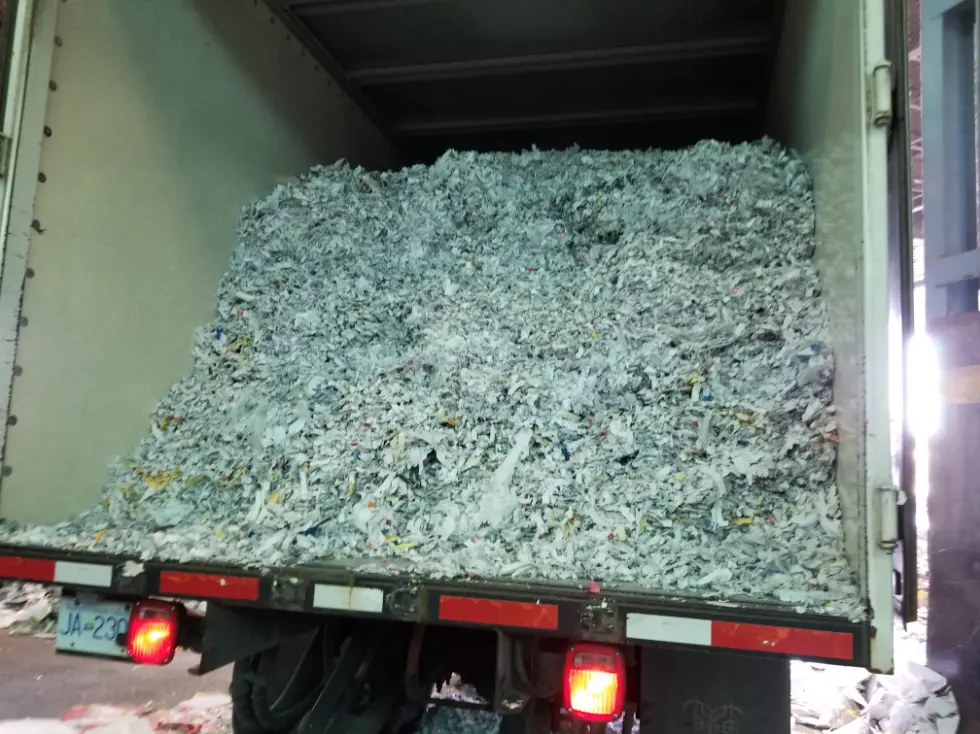
Our shredding truck comes to your home or office anywhere in Greater Vancouver. You watch the papers go into the shredder on-site. You do not need to sort anything ahead of time. No papers leave your property until they are destroyed. When the job is done, you get your certificate of destruction before we leave.
| Factor | DIY Shredding | Mobile Shredding Service |
| Security level | Strip-cut or basic cross-cut | Industrial-grade cross-cut / micro-cut |
| Volume capacity | Low — overheats quickly | High — handles boxes of documents |
| Time required | Hours of your time | Completed in minutes on-site |
| Certificate of destruction | Not available | Provided on completion |
| Witnessed destruction | Yes, but labour-intensive | Yes — you watch the process |
| Recycling | Varies — depends on your bin | Certified recycling after shredding |
| Suitable for | Occasional single pages | Annual purges, estate cleanouts, business purges |
| You know what is safe to shred. Let us take care of the rest — safely, on-site, anywhere in Greater Vancouver. |
| Schedule a Document Shred Pickup in Vancouver Today → |
Footnotes
[1] CRA — How long should you keep your income tax records? The CRA says individuals must keep supporting documents for six years. This includes receipts, bank statements, and cancelled cheques used to support claims.
Sources
CRA — How long should you keep your income tax records? (individuals)
CRA — Where to keep your records, for how long, and how to request permission to destroy them early
CRA — Acceptable format, imaging paper documents and backing up electronic files
CRA — Information Circular IC05-1: Electronic Record Keeping
CRA — Information Circular IC78-10: Books and Records Retention/Destruction
Canadian Anti-Fraud Centre — 2024 Annual Statistical Report
Office of the Information and Privacy Commissioner for BC — Guidance Documents
Related services from INFOshred: secure paper shredding in Vancouver · hard drive & data destruction