Understanding Paper Shredding Service Costs
A four-drawer filing cabinet holds about 10,000 to 12,000 sheets of paper. Shredding it can cost between $100 and $300. Most business owners don’t know why prices change until they get the bill.
Related services from INFOshred: paper shredding in Vancouver and scheduled shredding service.
Knowing what affects shredding costs helps you compare prices. You can avoid surprise fees. You can pick the right service without paying for things you don’t need.
We’ll explain the six main things that change your price. These are volume, how often you shred, service type, security level, location, and extras. You’ll see how each one changes your cost. We’ll show you which ones you can control to save money while staying compliant.
Prices shown reflect typical Greater Vancouver rates as of 2026. Prices may vary by company. Contact us for current pricing for your needs.
What Factors Affect the Pricing of Paper Shredding Services?
Six main factors determine paper shredding service pricing:
Volume – More documents cost more (usually $0.99–$1.49 per pound for drop-off or $8–$15 per box)
Frequency – One-time cleanouts cost more per pound than monthly service
Service type – On-site mobile shredding costs 20–30% more than off-site
Security level – Cross-cut shredding costs slightly more than strip-cut
Location – Cities with more companies often have lower prices than rural areas
Container rental – Lockable bins for scheduled service add $35–$65 per month
Most businesses save money by choosing scheduled service. They also save by grouping shredding into monthly or quarterly pickups.
Get a free shredding quote
How Paper Shredding Companies Calculate Costs
Shredding companies use three common ways to set prices. Weight-based pricing charges $0.99–$1.49 per pound for drop-off service. Container-based pricing charges $8–$15 per box. Flat monthly rates work for scheduled service accounts.
Understanding Minimum Service Charges
Most companies use tiered pricing. Small jobs cost more per unit. A minimum service charge of $75–$150 applies to one-time calls. This covers the truck, fuel, and labor time.
Mobile shredding uses different rates than plant-based shredding. Mobile services bring the truck to you. You pay more to watch your documents get destroyed. Plant-based services pick up your documents. They shred them at their building. This costs less. But you need to trust the process.
Weight-Based vs. Container-Based Pricing
Clients often ask us why one company charges by weight and another by box. The answer depends on their equipment. Mobile shredding companies often charge by weight. Their trucks have scales. Plant-based companies may charge by container. It’s easier to quote over the phone.
Volume of Documents — The Biggest Price Driver
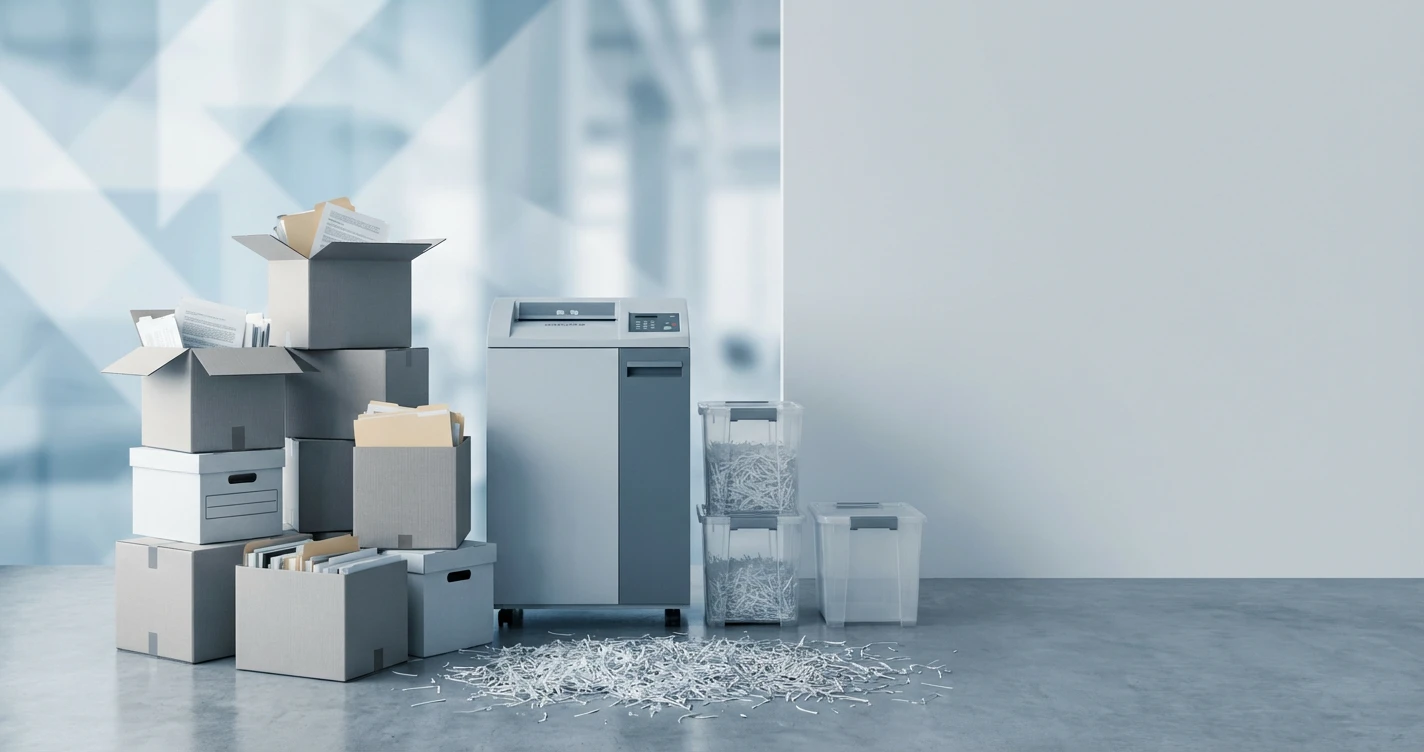
Knowing your document volume helps you get good quotes. A standard four-drawer filing cabinet holds about 10,000 to 12,000 sheets. A banker box holds about 2,500 sheets. Standard office paper weighs about 100 sheets per pound.
How Volume Affects Per-Pound Pricing
Per-pound pricing drops a lot at certain amounts. Small jobs under 100 pounds get the highest rate. Jobs over 500 pounds get bulk pricing. The difference can be big.
Bulk discounts usually start at 1,000 pounds or more. Office cleanouts often reach this amount. For example, a law office had 40 banker boxes plus three filing cabinets during a move. That was about 850 pounds of paper.
Scheduled Service Volume Benefits
Ongoing scheduled service gets better rates than one-time pickups. Shredding companies like steady customers. They give you some of that savings through lower rates.
Volume Estimation Guide
| Container Type | Sheets (approx.) | Weight (approx.) |
| Filing cabinet (4-drawer) | 10,000–12,000 sheets | 100–120 lbs |
| Banker box | 2,500 sheets | 25–30 lbs |
| Retail copy paper box | 2,500 sheets | 25–30 lbs |
Service Frequency — One-Time vs. Scheduled Shredding
One-time purge pricing costs more per unit than recurring service. You pay more because the company doesn’t know when you’ll call again. They need to cover their costs on one visit.
Benefits of Scheduled Shredding Service
Scheduled service locks in lower rates. You can pick weekly, monthly, or quarterly options. The company knows you’ll be a regular customer. They reward that with better pricing.
Minimum service fees can reduce savings for very small accounts. If you only fill half a bin each month, you might pay the same as someone who fills a full bin. Ask about minimum charges before signing up.
What’s Included with Recurring Service
Container rental comes with scheduled service but not one-time pickups. This adds $35–$65 per month in value. The lockable bin sits in your office. You put documents in it all month long.
Here’s a typical example. An annual purge might cost $480 for 200 pounds once per year. Quarterly service could cost $140 per quarter ($560 yearly). But it includes four secure bins and certificates of destruction. The scheduled option gives better security for only $80 more per year.
Cost Comparison: One-Time vs. Scheduled Service
| Service Type | Relative Cost | Includes Container | Certificate | Best For |
| One-time purge | Higher | No | Varies | Annual cleanouts, office moves |
| Monthly service | Lower | Yes | Included | High-volume offices |
| Quarterly service | Moderate | Yes | Included | Small to medium offices |
Request your shredding quote
Type of Shredding Service — On-Site, Off-Site, or Drop-Off
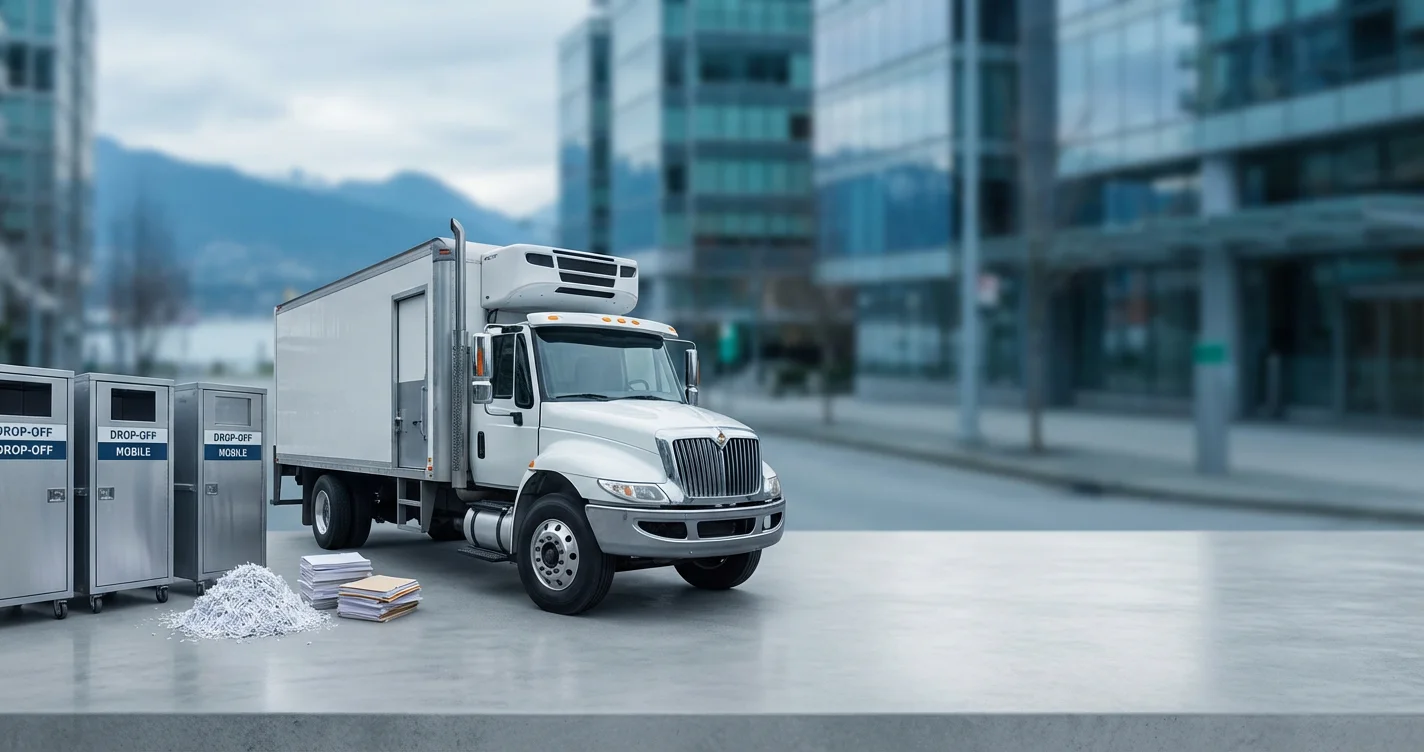
On-site mobile shredding costs 20–30% more than off-site service. The extra cost covers the truck, fuel, and labor time. Mobile trucks are expensive. Operators need to maintain and staff them. You pay for that.
On-Site Mobile Shredding Advantages
The benefit is security. You watch your documents go into the shredder. Nothing leaves your property until it’s destroyed. This matters for rules in certain industries.
Off-site plant-based shredding costs less. The company picks up your locked containers. They take them to their building. You save money but need to trust the process. Good companies use GPS tracking and security rules.
When Drop-Off Service Makes Sense
Drop-off shredding is the cheapest option. You bring boxes to the shredding building yourself. This works for small amounts. But it gets hard quickly. Loading and moving 20 banker boxes takes time and vehicle space.
We recommend on-site service for patient records, financial data, or legal files. The extra cost is worth it for sensitive materials. Off-site service works well for general office paper. Use it when volume matters more than watching the destruction.
Service Type Comparison
| Service Type | Security Level | Convenience | Price Range | Best For |
| On-site mobile | Highest (witnessed) | High | $$$ | Healthcare, legal, financial |
| Off-site plant | High (GPS tracked) | Medium | $$ | General office purges |
| Drop-off | Medium | Low | $ | Small volumes, cost-conscious |
Security Level and Compliance Requirements
Strip-cut shredding creates long vertical strips. Cross-cut creates small rectangles. Micro-cut creates tiny particles. Most professional shredding services use cross-cut or micro-cut as standard. These methods meet recognized security standards.
Professional shredding companies may get industry certification. This proves they follow security standards. The i-SIGMA NAID AAA Certification verifies that companies follow all data protection laws. They do this through scheduled and surprise audits by trained security professionals.
PIPEDA and Privacy Compliance
PIPEDA requires organizations to destroy personal information securely. The Office of the Privacy Commissioner of Canada provides detailed guidance on keeping and destroying personal information. This includes best practices for choosing destruction methods. Organizations that don’t protect personal information properly can face penalties under PIPEDA.
Industry-Specific Certification Requirements
Different industries may need special documentation. Certified destruction includes proof that your documents were destroyed properly. Healthcare providers need this for PHIPA compliance. Financial services need documentation for CRA record retention requirements and audits. Legal practices follow Law Society retention and destruction standards.
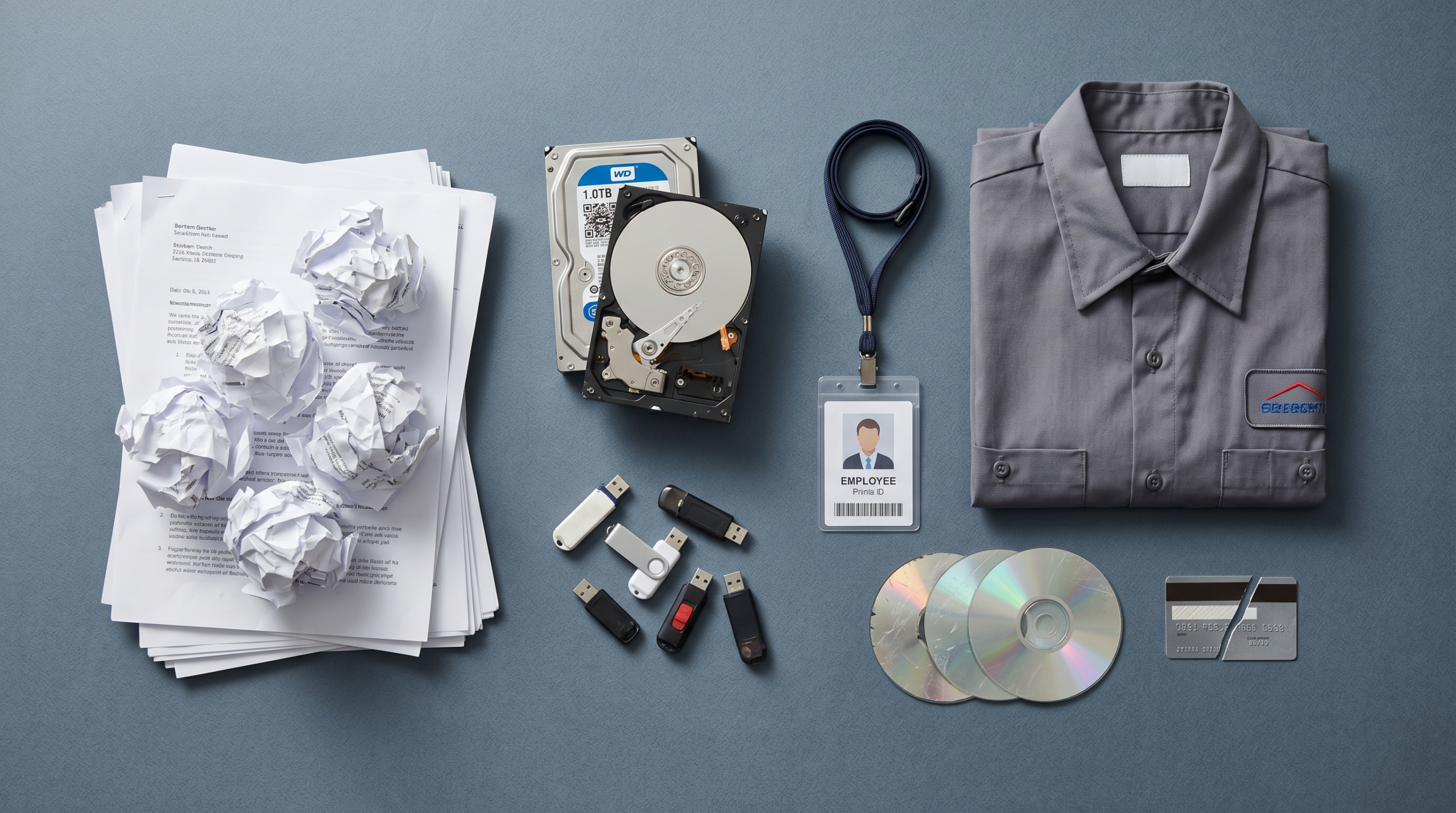
Hard drive and electronic media destruction uses different equipment. This service costs extra—usually $7–$20 per drive. The drives get physically destroyed to meet media sanitization standards, not just wiped. You get a certificate listing serial numbers.
Certificate of Destruction Documentation
Most providers include the Certificate of Destruction in their standard service. Ask about this when comparing quotes. The certificate protects you in audits.
We work with healthcare and financial clients in BC regularly. Most need certificates for every shredding event. Medical clinics want proof they destroyed patient files properly. Accounting firms need documentation for client file destruction. Proper certification protects against compliance violations.
Compliance Requirements
- PIPEDA requires secure destruction of personal information
- PHIPA adds healthcare-specific privacy requirements
- Legal practices follow Law Society retention and destruction rules
- Financial services comply with CRA and securities regulations
Geographic Location and Service Area
Urban areas like Vancouver, Surrey, and Richmond have more shredding companies. More companies mean lower prices. You can often find better rates in cities than rural areas.
Travel Surcharges for Rural Areas
Rural or remote areas may have travel fees. Providers need to cover fuel and time to reach you. Some require minimum amounts for far locations. A company might service Maple Ridge regularly but charge extra for Mission or Chilliwack.
Service area size affects whether you pay travel fees. Companies usually have a main zone with standard pricing. Outside that zone, fees apply. Ask where the service area ends when getting quotes.
Competition and Pricing Differences
Fewer provider options in some areas reduce price competition. If only one or two companies serve your area, rates may be higher. You have less power to negotiate.
We see service area differences across the Lower Mainland versus Vancouver Island. Mainland clients have multiple provider options. Island clients often pay slightly more. They have fewer choices. The ferry crossing creates a natural barrier.
Additional Services That Increase Costs
Lockable console or bin rental adds $35–$65 per month per unit for scheduled service. These secure containers sit in your office. Staff drop documents in all month. The lock prevents unauthorized access.
After-Hours and Emergency Service Fees
After-hours or emergency shredding costs more than standard business hours. Standard service happens during business hours. If you need weekend or evening pickup, expect higher pricing. Rush jobs also cost extra.
Specialty Item Destruction Pricing
Hard drive destruction, product destruction, and specialty items use separate pricing. Things like pharmaceutical packaging, uniforms with logos, and expired products need different equipment. Get quotes for these separately. Hard drive destruction usually costs $7–$20 per drive.
Expedited and Inside Pickup Services
Rush job fees apply to expedited service. Standard scheduling gives the company 3–7 days. Same-day or next-day service costs more.
Some providers charge extra for inside pickup versus curbside pickup. Curbside means you bring containers to a loading area. Inside pickup means the crew enters your office and collects bins from individual rooms.
Common Add-On Services
- Lockable console rental: $35–$65/month per unit
- After-hours service: Premium pricing applies
- Hard drive destruction: $7–$20 per drive
- Expedited service: Premium pricing applies
- Inside pickup service: Additional fees may apply
Citations
- i-SIGMA. “i-SIGMA NAID AAA Certification.” International Secure Information Governance & Management Association, https://isigmaonline.org/certifications/naid-aaa-certification/